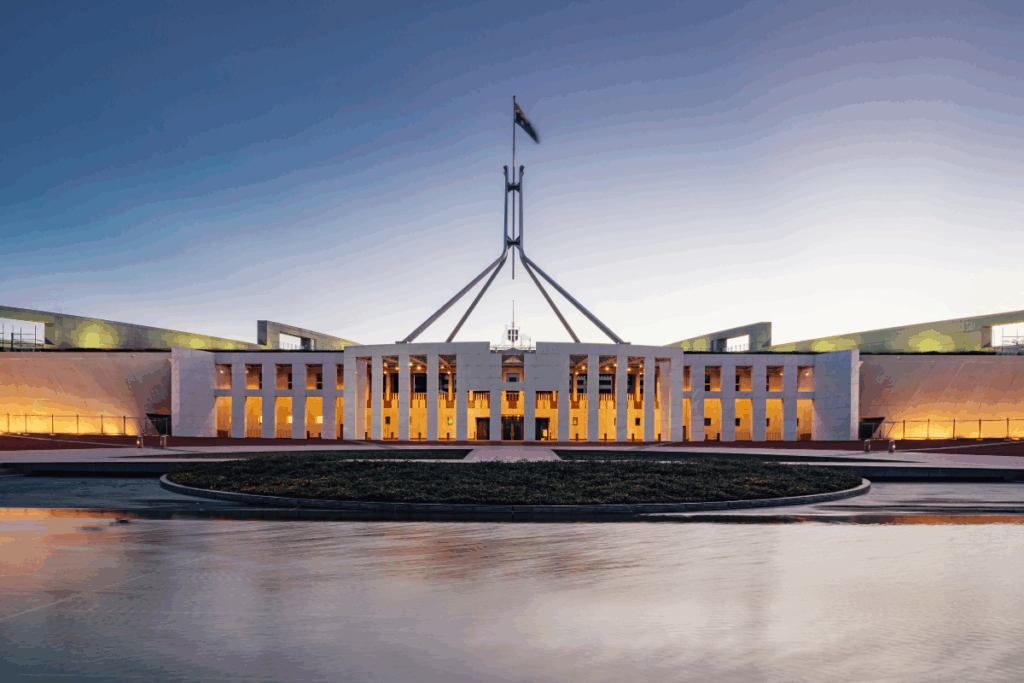
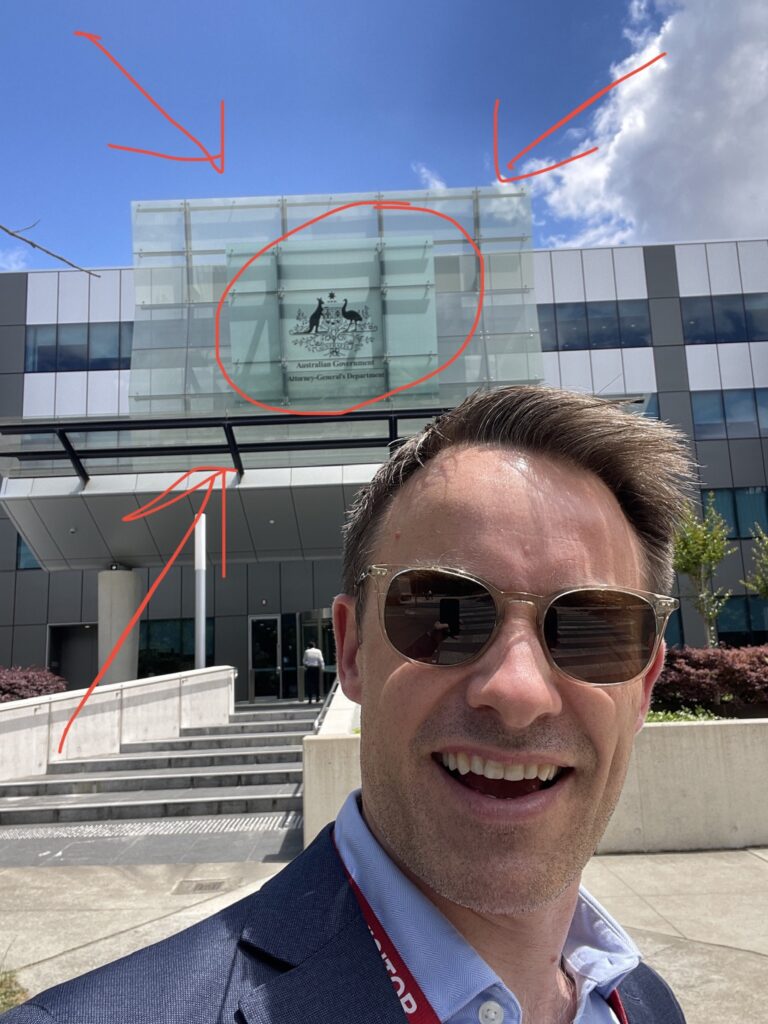
The Attorney-General’s Department (AGD) held its most recent Celebrant Associations & Networks Meeting on 4 December 2025 in Canberra, bringing together representatives from celebrant associations across Australia for a full day of updates, consultation, and discussion.
With more than 10,000 Commonwealth-registered marriage celebrants nationwide, and more than 120,000 marriages registered in 2024, it is important that celebrants can give ‘on the ground’ feedback to the AGD about the reality of marriages in Australia today and the real challenges faced in the wedding industry.
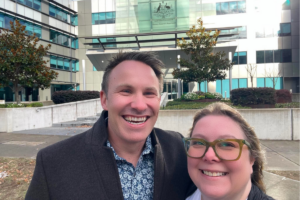
As always, The Celebrant Society (TCS) was there to represent our members, with NSW Local Leader Alison attending her first meeting in person (exciting!) and co-director Gaz joining via videoconference.
There was a lot of passion in the room, with delegates representing celebrants from all over Australia. While there were many different ideas and opinions, there was also a strong spirit of collaboration and honest, open discussion as we worked through regulatory, administrative, and professional matters affecting marriage celebrants.
Here are our key takeaways from the meeting.
Focus groups for important topics
This year, the AGD introduced focus groups, allowing celebrant associations and delegates to do a deeper dive into topics that need more attention than can be covered in the biannual meetings.
Notice of Intended Marriage (NOIM) updates
With the introduction of remote witnessing last year, the NOIM needs to be updated. The MLCS provided a draft NOIM with some great proposed changes that go beyond just updating for the Marriage Act changes:
- More tick box options to make it easier for the Australian Bureau of Statistics to collect accurate data (plus, we love a tick box!)
- Removal of occupation fields
- Making the parent fields optional. In our opinion, this would be a very welcome change – no more forcing couples to include their estranged parents on their paperwork if they don’t want to. However, in the past, this has been a difficult change to get through the review process with other stakeholders, so we’ll need to wait and see.
- Clearly asserting that the NOIM cannot be backdated next to the ‘date received’ box. This was very well received as it may help reduce pressure from couples who ask if this can be done.
- Additional details when a NOIM is transferred
- And of course, information about witnessing both in person and remotely
We must stress that this draft NOIM is still in the early stages of consultation. Other stakeholders will also be asked to provide feedback, and there is no guarantee that all proposed changes will make it into the final version. That said, we were happy to see what we think are some very positive steps in the right direction.
Shortening of Time
Shortenings of Time (SoTs) can be challenging to navigate, with different state BDMs and prescribed authorities each having their own processes. The focus group discussed several issues and suggestions, including:
- The need for an emergency contact for SoTs, particularly in cases involving medical reasons, as prescribed authorities are generally only available during normal working hours. MLCS suggested it may be useful to collect data on how frequently these emergency situations occur.
- Border celebrants continue to face issues where BDMs refuse to grant SoTs when the wedding is taking place in another state, even if the couple resides in the same state as the refusing BDM. There is nothing in the Marriage Act or Marriage Regulations that restricts prescribed authorities by state boundaries, so this should not be an issue.
- Many celebrants are unaware of how to apply for an SoT, or whether they can apply on behalf of their couple, due to differing processes in each state. It was suggested that the AGD could encourage BDMs to provide clearer education or training for celebrants.
- There was also a call for greater transparency around the cost of SoTs. Each BDM and courthouse sets its own fees, and the focus group suggested either more consistency and/or a central source of information to help celebrants better advise their couples.
Focus groups for 2026
MLCS announced five focus groups for next year:
- The Celebrant Checklist (updating the one currently in the Guidelines)
- Celebrant obligations in an online environment
- The Guidelines
- The Happily Ever Before and After Brochure
- The NOIM
Professional standards
The MLCS is committed to raising and maintaining the professional standards of civil celebrants in Australia and in 2026 this is going to be a key focus for them.
Re-introduction of performance reviews for civil celebrants
The Marriage Act has long allowed the AGD to conduct performance reviews of celebrants, but this has not been done regularly in recent years.
That is set to change with the introduction of a performance review pilot program, intended to commence in February 2026. Performance reviews may be prompted by complaints or selected at random.
MLCS said that specific details are still being developed and that the pilot program will help shape how reviews are rolled out more broadly. They also indicated that BDMs and potentially other stakeholders may be involved in the process.
Performance reviews are nothing to be scared of. In fact, we think this is a wonderful development that will help raise the standards across the profession, identify knowledge gaps, and give individual celebrants extra training where needed, as well as an opportunity to give their own feedback directly to the MLCS team. To find out more about performance reviews, see s39H of the Marriage Act and s59 of the Marriage Regulations.
Knowledge of the Law (KOTL)
MLCS asked how they could better deliver important legal information to celebrants. Currently, this is done through a Knowledge of the Law component in the annual compulsory professional development (CPD), as well as occasional emails and fact sheets.
There was broad agreement that a holistic approach is required to ensure celebrants maintain their knowledge of the law. This includes Certificate IV training, ongoing education provided by associations, guidance from MLCS, and an individual’s responsibility to stay informed and up to date with marriage law.
(We reckon we are already smashing the ongoing education bit for TCS members with monthly webinars, our annual conference, blog posts, newsletters, and our incredibly helpful and informative members-only Facebook group!)
Other suggestions raised included reintroducing a knowledge test as part of the celebrant application process, removing the CPD exemption in a celebrant’s first year, and implementing a review or assessment process every five years to ensure ongoing currency of knowledge.
Compulsory professional development (CPD)
Overall, feedback indicated that CPD (also known as ongoing professional development or OPD) was well written this year and covered a strong range of topics. However, as of 2 December, only 68% of celebrants had completed it. This means nearly one-third of celebrants had not yet met their requirement with less than a month remaining.
If you are one of them, remember that CPD must be completed by 31 December. We strongly recommend not leaving it until the last minute in case of technical issues. Check out our tips for completing CPD, or if this is your first time, read our introductory blog post explaining what to expect.
Happily Ever Before and After brochure (HEBA)
The consultation period for the draft HEBA has now closed, and MLCS has begun reviewing the significant volume of feedback received. Key themes included:
- Strong support for changing the document title, with “Getting Married in Australia” emerging as a popular option
- A need for clearer, plain-language explanations of legal terms such as “solemnise”
- General agreement that information about the celebrant complaint process should be included, but not as a prominent feature
- Development of a dedicated digital version of the document rather than a simple PDF of the printed layout
- Translated versions being released after the final English version due to procurement requirements
Updated Guidelines
The consultation period for the updated Guidelines closed one week prior to this meeting. MLCS is still working through the 129 formal submissions received, along with numerous emails, so there was limited information to report at this stage. However, MLCS indicated that some content, such as guidance on working in an online environment, may be moved to an appendix to allow for easier updates in future.
Form 15s
The message has been heard loud and clear: celebrants are NOT loving the new Form 15s. The previous forms were printed on 180gsm paper stock, which is no longer available.
Canprint advised that some celebrants had reported the previous paper stock was too thick for certain home printers, leading to the switch to 150gsm. It is fair to say that this change was not well received.
During the meeting, three paper samples were circulated: 150gsm, 170gsm, and 190gsm. The general consensus was that 170gsm would be the preferred option. MLCS advised they would pass this feedback on to Canprint, so hopefully we will see new stock soon.
Other issues raised
Separate meetings
There continues to be some confusion around the separate meetings requirement, with some celebrants mistakenly believing that fulfilling this requirement is the same as ensuring consent. MLCS clarified that while separate meetings are a tool to help assess consent and provide couples with a safe opportunity to raise concerns, they do not replace the celebrant’s obligation to ensure that consent is freely given.
It was also suggested that a tick box could be added to the NOIM to record when the required separate meetings have been completed.
Delays for new registrations
Due to staffing issues, the recent processing time for new celebrant registrations has been approximately five to six months. This has raised concerns about the growing time gap between completing the Certificate IV in Celebrancy and solemnising a first marriage, with new celebrants potentially forgetting key information before being able to apply it in practice. It also creates the possibility of a significant delay between training completion and the requirement to complete first CPD.
MLCS advised that staffing issues have now been resolved and that their intention is to reduce processing times back to approximately three months.
Timeframe for replies to enquiries
If you do not receive a response, MLCS encouraged celebrants to follow up, as delays may occasionally be due to IT issues. For genuinely urgent matters, such as those affecting an upcoming wedding, “urgent” may be included in the subject line, but MLCS stressed this should only be used when appropriate (e.g. it impacts a wedding happening that week). For context, between 1 July 2025 and 2 December 2025, MLCS received 8,467 enquiries across email, phone, fax and even post, so they aren’t ignoring you – they’re just very busy.
Conclusion
2026 is shaping up to be a very busy year in the world of marriage celebrancy with lots of changes on the horizon. While there is still a lot to be done before much of what was discussed will come to fruition (nobody hold their breath just yet!), we’re excited to see what we think are some really positive advancements in the areas of professional standards, support, education and documentation.
The next Attorney-General’s Department Celebrant Associations & Networks Meeting is scheduled for 4th June 2026. If you have any feedback or concerns you would like us to raise on your behalf, please contact us at [email protected]