What are the wedding industry trends in 2026
We hear a lot of chatter about the difficulties facing the wedding industry today or expectations around what is the “average” when it comes to pricing and service offerings, but how much of it is anecdotal and what can actually be backed by numbers?
In the lead-up to the 2026 Celebrant Conference in Melbourne, we surveyed The Celebrant Society (TCS) members. The aim was to get a clearer idea of what is happening within our businesses, where the challenges lie and what opportunities are there for the taking.
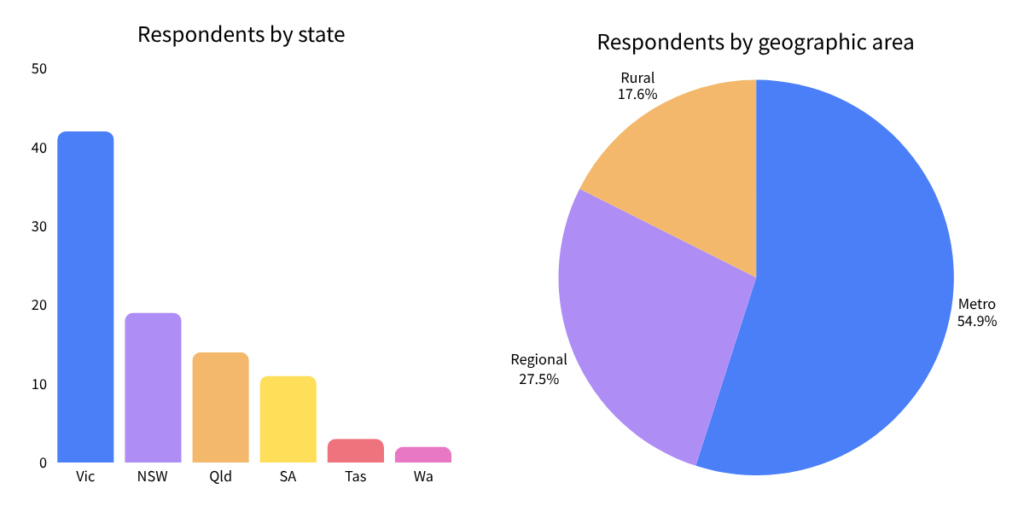
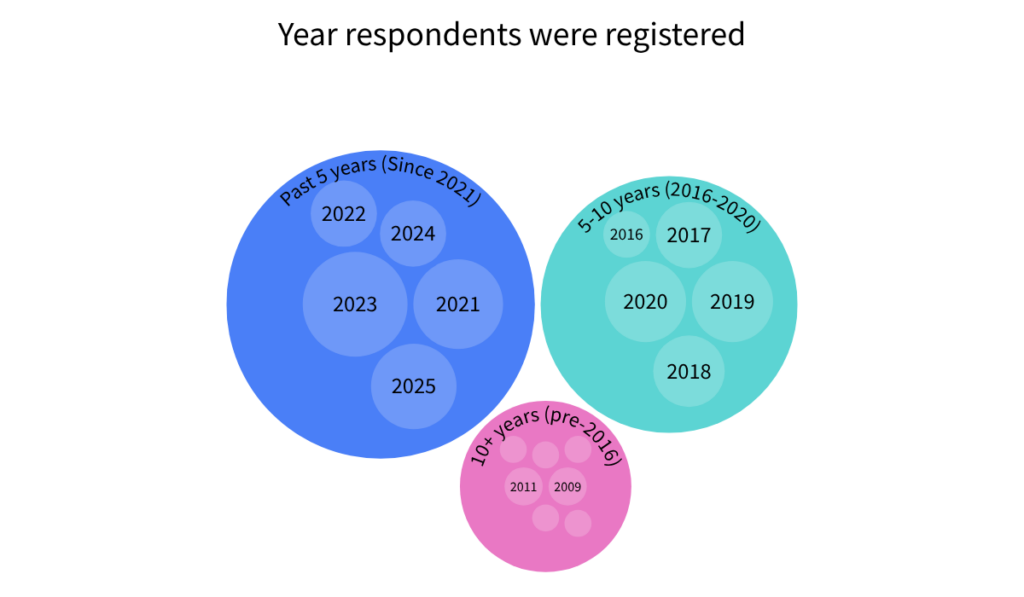
A caveat: We received 91 responses from celebrants across Australia. This reflects less than 20% of The Celebrant Society membership, and of course, is only a tiny sliver of the 10,000+ civil celebrants currently registered in Australia. So the results below should be considered more of a snapshot of our TCS community rather than a full industry census. (That being said, we are hoping to expand this survey in following years to capture a more complete picture of the celebrant industry).
Who responded?
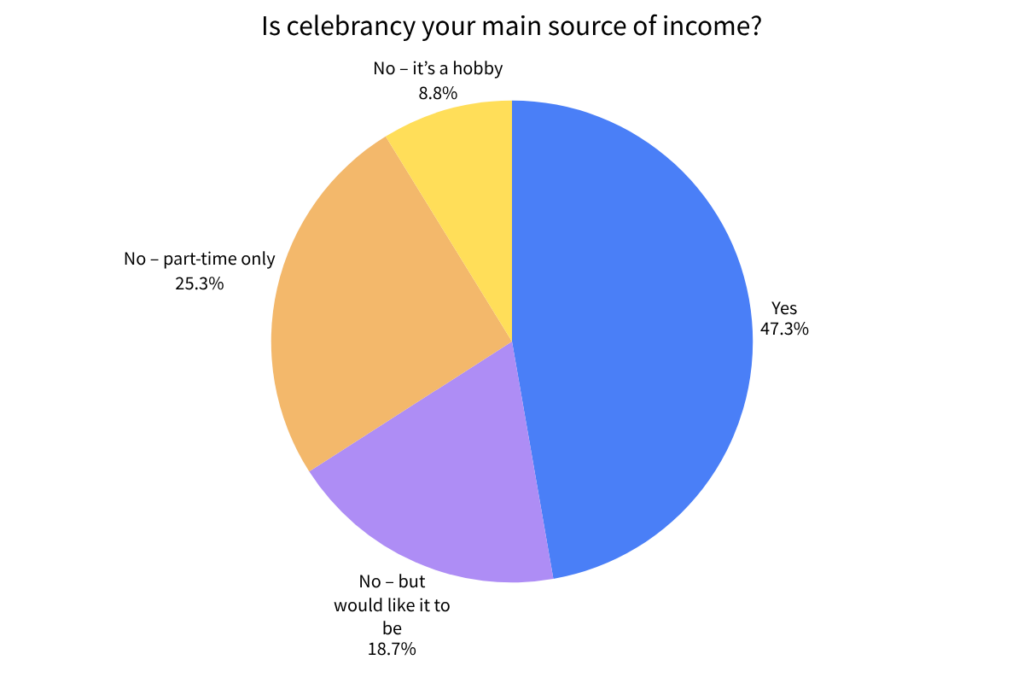
Celebrancy is a main income source for some, but not all
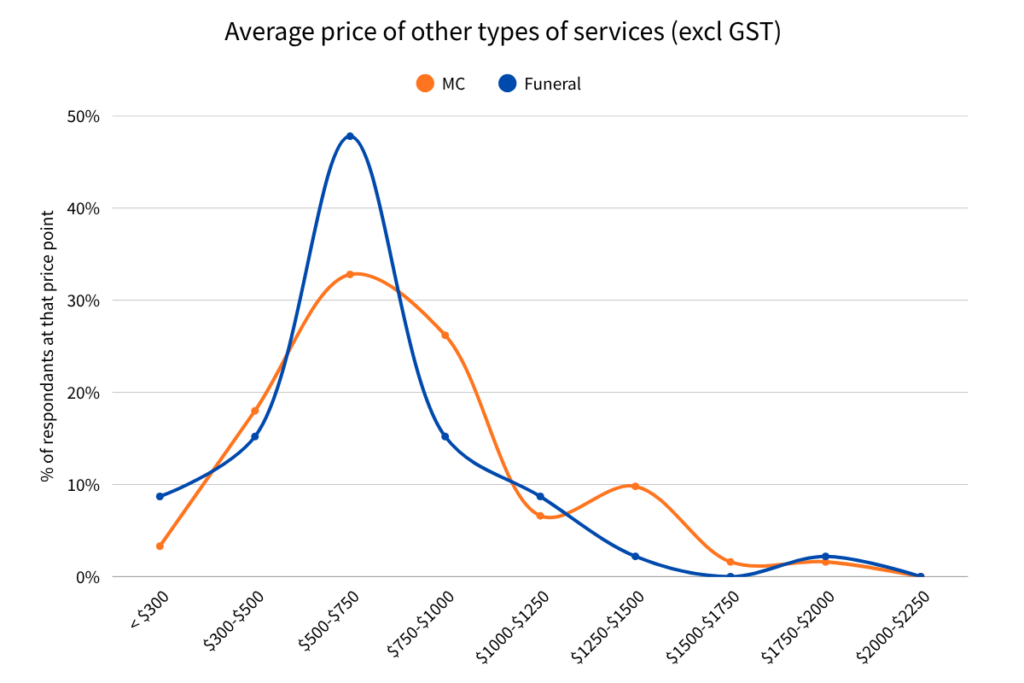
MCs, funerals and more
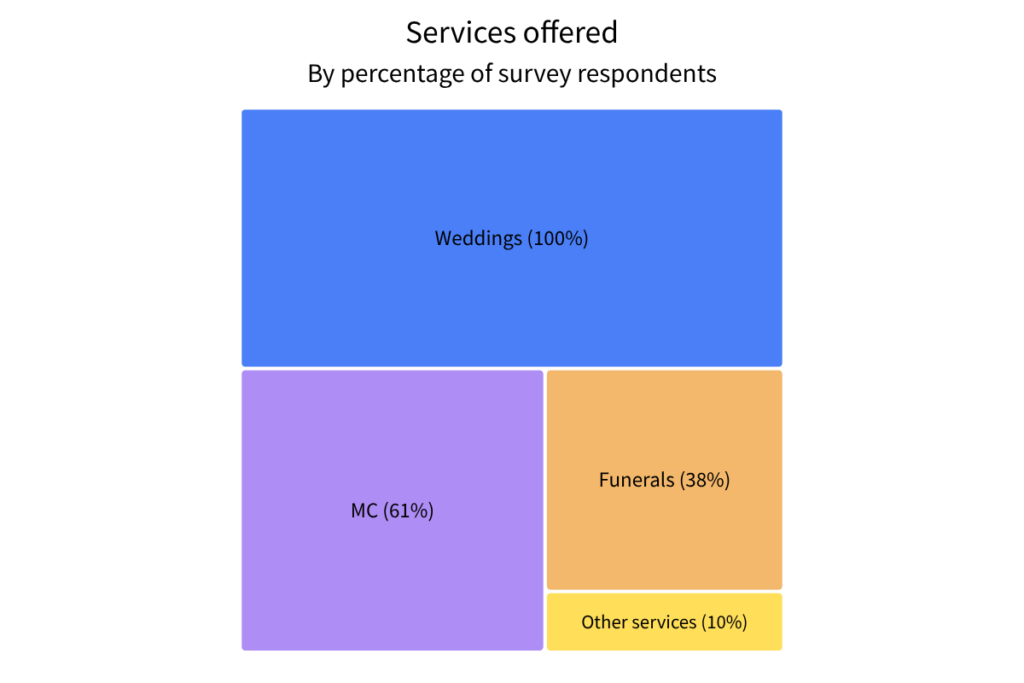
All respondents working in 2025 offered weddings (no surprises there), but a significant number have diversified into other related services as well.
MCing was the most popular add-on with around 60% of respondents offering this service, while another 13% said they would consider adding this in the future.
Perhaps one of the best areas for opportunity was funerals with 37% already offering it and a further 33% saying they are interested in adding funerals to their repertoire.
This was also heavily reflected in our open-ended “What areas would you like more training in?” section, where many people were requesting more education around funerals and MC work.
Did you know: TCS members already have access to a lot of resources to help with funerals and MCing? Log in to check out the Members-Only area.
While funerals and MC dominated the non-wedding service options, there were a handful of other ceremonies that our members also offer, including naming ceremonies, vow renewals, and non-wedding handfastings. Beyond ceremonies, we also had one respondent offering wedding planning and coordination, while another also DJs!
This was a great insight not just into how wonderfully transferable our celebrant skills can be, but also into the opportunities available to expand our services and build sustainable businesses that can better weather economic ups and downs.
Celebrant fees are varied, and price education remains a challenge
We asked respondents to give us their average fee in 2025 for the following services:
- A standard wedding (not micro, elopement or legals-only style)
- A small wedding (eg elopement/micro/legals-only style)
- MC
- Funeral
The average fees excluded GST and were for services within an hour of home (as travel fees can widely affect pricing).
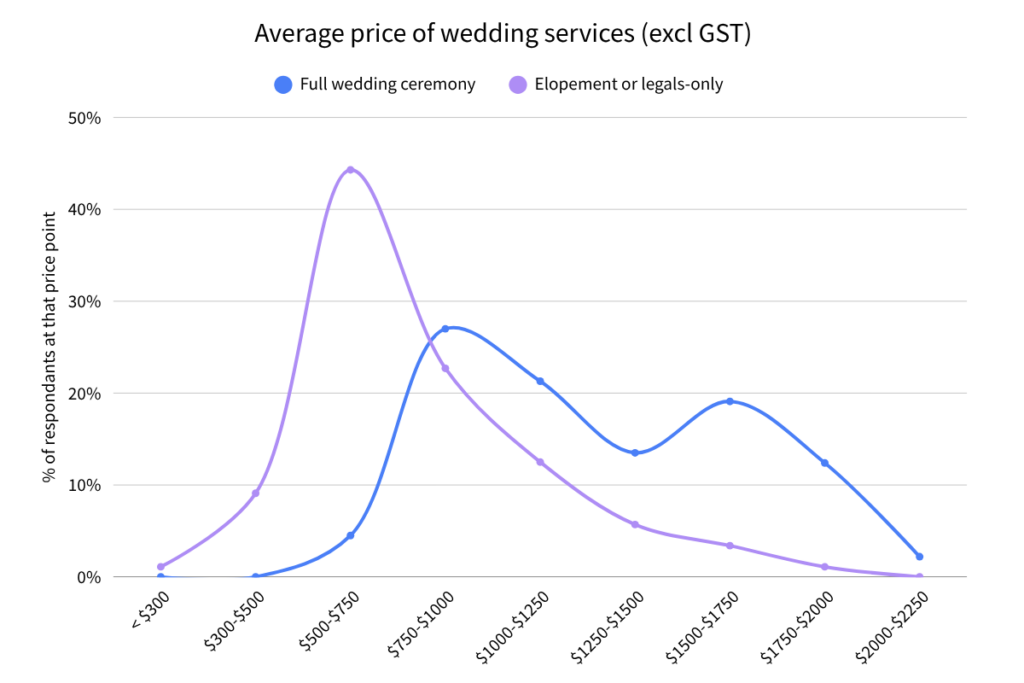
The service that attracted the widest variety in pricing was a standard wedding ceremony. Considering the varied levels of experience among the survey respondents this was not surprising. While the most common fee range was $750-$1,000, the median response sat in the $1,000-$1,250 range. However, all price groups from $1,000 to $2,000 were well represented.
For small weddings, elopements, micro weddings and legals-only style ceremonies, the most common fee range by far was $500-$750, though some respondents could still command $1,500+ for these types of ceremonies.
Celebrant prices by area
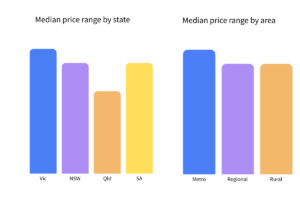
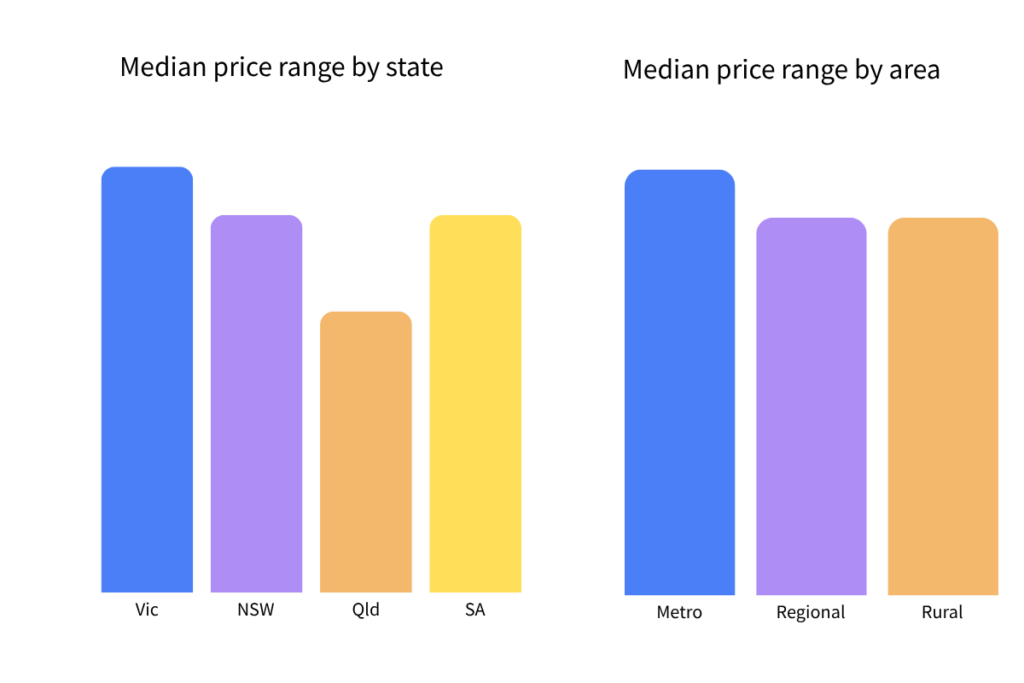
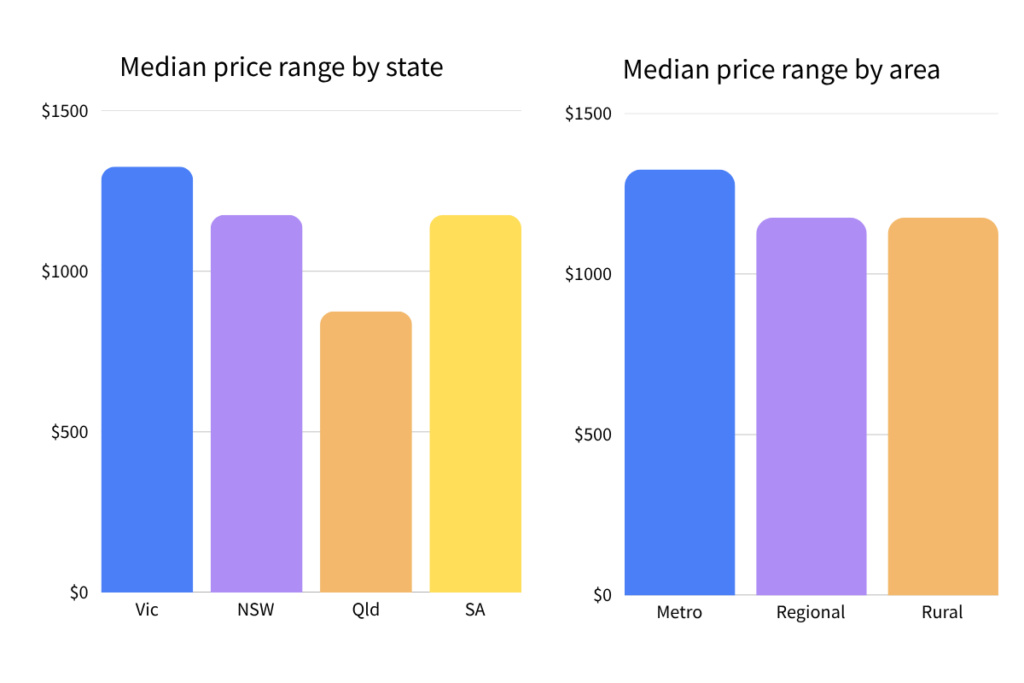
When looking at a standard wedding, there was also some variation in the fees that people commanded based on their state and geographic location. With Victorians having the highest median price range across the country with Queensland celes charging the least (note, we haven’t included Tasmania or WA in the below chart, as there were only a few respondents in each of these states, all charging different amounts).
Pricing pain points
But the numbers aren’t the whole story.
Pricing was one of the biggest points of concern in the open-text response portion of the survey. Respondents raised concerns about undercharging in the industry, wide variation in fees, couples not understanding the work involved, and the pressure of pricing sustainably with the cost-of-living squeeze.
One recurring theme was that celebrants feel the role is still undervalued, with a lack of education among engaged couples on what a celebrant actually does. Several respondents mentioned that there’s still a perception that a celebrant “only works for 20 minutes on the day”, even though that ‘20 minutes’ is, in fact, underpinned by meetings, ceremony writing, paperwork preparation, admin, travel, rehearsals, delivery, registration and a LOT of legal liability to ensure the marriage is valid.
That gap (chasm?) between perceived value and actual workload still remains one of the major challenges facing celebrants.
Bookings were mixed, but not universally down
One of the biggest surprises of the survey was that bookings were not as down across the board as the general industry chatter might have you believe. When asked how 2025 bookings compared with 2024, the results were mixed.
Of those who answered, 37% reported an increase in bookings, 30% said bookings were about the same, and 16% reported a decrease. (Another 17% were not performing ceremonies in 2024, so did not have a direct comparison.)
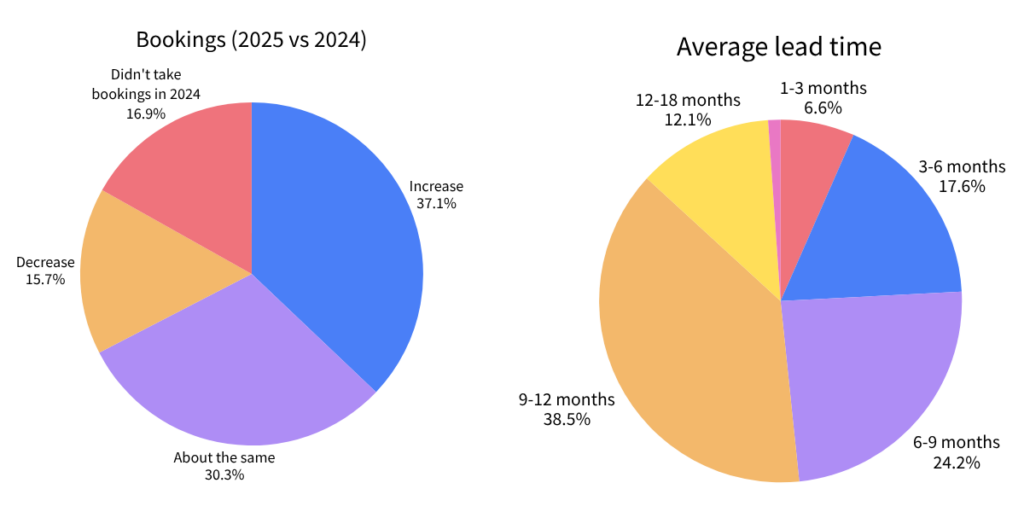
While a significant portion of celebrants are experiencing a slowdown, there’s a much larger group who are either seeing growth or holding steady. However, it’s important to note that this survey only looked at the 2025 vs 2024 data, and not what’s been happening so far this year.
Even so, there has been a persistent feeling for a while now that bookings are decreasing. Could it just be the natural reduction following the artificial inflation in weddings brought on by the post-COVID boom of 2022-2023, or is there something else at play…
Are wedding booking lead times getting shorter?
While we didn’t collect comparative data between 2024 and 2025 on lead times, shorter lead times (i.e. the time between booking and the wedding) is a trend that a lot of celebrants – and other wedding vendors – are anecdotally reporting.
The most commonly reported average time between enquiry and wedding was 9-12 months, which sounds pretty reasonable. But what is notable is that nearly one-quarter of survey respondents reported an average lead time of 6 months or less in 2025.
But why does this matter? As one survey participant said in response to the open-answer question about the challenges faced by celebrants today, “Short lead times for bookings make it hard to forecast.”
It’s hard to know if this will be a temporary blip in the usual wedding planning process, or whether it is time for celebrants to start adapting the way they forecast and budget for the year ahead.
Paid marketing
To pay or not to pay?
While most celebrants engage in different forms of unpaid marketing (e.g. organic SEO, social media posts, networking etc.), just over two-thirds of the survey respondents also put dollars into their marketing strategy (not counting the directory listing all TCS members get as part of their membership).
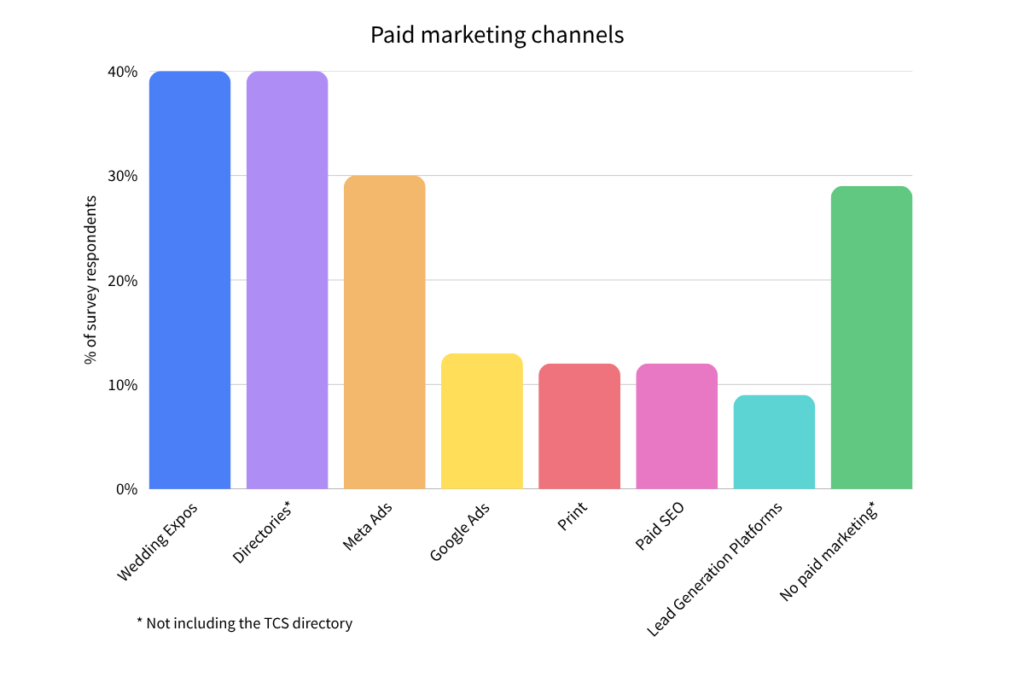
The most common paid marketing options explored in 2025 were wedding directories (other than TCS) and wedding expos. Meta ads (i.e. Facebook and Instagram) were also common, while smaller numbers reported using Google Ads, SEO, print marketing or lead generation platforms such as Bark.
What wasn’t reported by the survey was how successful these paid marketing funnels are in converting to actual bookings, and from the open-ended answers, it seems like using marketing channels (both paid and organic) for the best return on investment is something celebrants are wanting help with.
In the “What areas would you like more training in?” section of the survey, common responses included social media, SEO, Google Ads, lead generation, Instagram Reels, websites, AI-assisted marketing and conversion.
Celebrants and technology

When it comes to the day-to-day running of their business, 60% of survey respondents use CRM (Customer Relationship Management) software such as 17hats or Studio Ninja. And nearly 7% use a virtual assistant to help manage administrative tasks or social media.
What about AI and celebrant businesses?
The use of AI is often a controversial topic – especially in creative industries – but it appears many celebrants have adopted it into their business practices.
Among those who answered the AI question, around 62% said they were using AI to help answer questions or research topics, 58% were using it for ceremony writing support, and 51% were using it for email writing or workflows. Some were also using it for social media, marketing, brainstorming, or proofreading.
At the same time, around 17% of respondents said they do not use AI in their business.
The biggest challenges facing celebrants
Probably the most interesting part of the survey was the open-text responses to the question “What do you believe are some of the major challenges facing celebrants and the wedding industry today?”
The answers were diverse, with a lot of different perspectives and angles on the issues, but some common themes did begin to emerge.
Profitability and business sustainability were at the top of the list of concerns, with repeated comments about the cost of living crisis, market saturation and undercharging by competition.
An issue particularly for regional and rural celebrants was the recent and substantial rising cost of fuel is making travel a much larger expense than was accounted for at the time of quoting and booking the wedding.
There is also a feeling that celebrancy is still an undervalued part of engaged couples’ planning process and therefore their budget. Some celebrants suggested that more needs to be done to educate couples right at the beginning of their wedding journey on what a celebrant actually does (and why it’s not just something you can get your mate to do to cut costs).
Outside of pricing concerns, other challenges highlighted were the emotional and physical burnout of running a solo business, weekend-heavy work, ghosting from enquiries and social media pressure.
What we learned from The Celebrant Industry Survey 2026
Even though the number of respondents represents only a small sliver of the industry, it’s clear that celebrants and TCS members are a passionate bunch who truly want to raise the bar on the celebrancy as a whole. Many are looking for stronger business support and training, better marketing strategies, and honest conversations about bookings and pricing.
While many are feeling the pressure that smaller weddings, shorter lead times, the cost-of-living crisis are having on their businesses, there are plenty of positives, too!
Many who answered the survey are still able to make celebrancy a profitable and viable business even in the current world economic climate. There are opportunities for celebrants to use their transferable skills to related services such as MCing and funerals to bolster their bottom line. And technology is helping us streamline our businesses better than ever before, so we can spend less time on admin, and more time marrying gorgeous Australian engaged couples.
Thank you to everyone who took the time to complete the survey. Your responses help us understand what is happening across the country and how The Celebrant Society can better serve our community.