Is It OK to Ask Guests to Pay for Their Meal at Your Wedding?
The dos and don'ts of a guest-covers-catering wedding reception
Weddings are expensive. And with the high cost of living and skyrocketing fuel prices continuing to squeeze household budgets, couples are looking for creative ways to make their wedding work financially. So it’s no surprise that some brides and grooms are asking: what if guests paid for their own meals?
Asking wedding guests to contribute to the cost of their dinner is a growing trend – and one that gets people talking! Look up this topic on any wedding forum and you’ll find wildly different opinions. Some people feel it’s not in keeping with traditional wedding hospitality, while others suggest that guests shouldn’t show up to a wedding purely for a free feed. But for every Facebook critic who calls it tacky, there’s someone who says they attended a wedding where it was done brilliantly and they had a wonderful time.
It’s worth remembering that there was a time when asking for cash instead of gifts was considered controversial, but has now become the norm in modern Australian weddings, so maybe we shouldn’t be too quick to dismiss the idea of spreading the cost of catering among the guests.
But as this is still a relatively new approach, there’s no established wedding etiquette to follow on the topic, which can make it tricky to navigate. So if this is something you are considering for your big day, here are some common sense guidelines that may help you pull it off graciously.
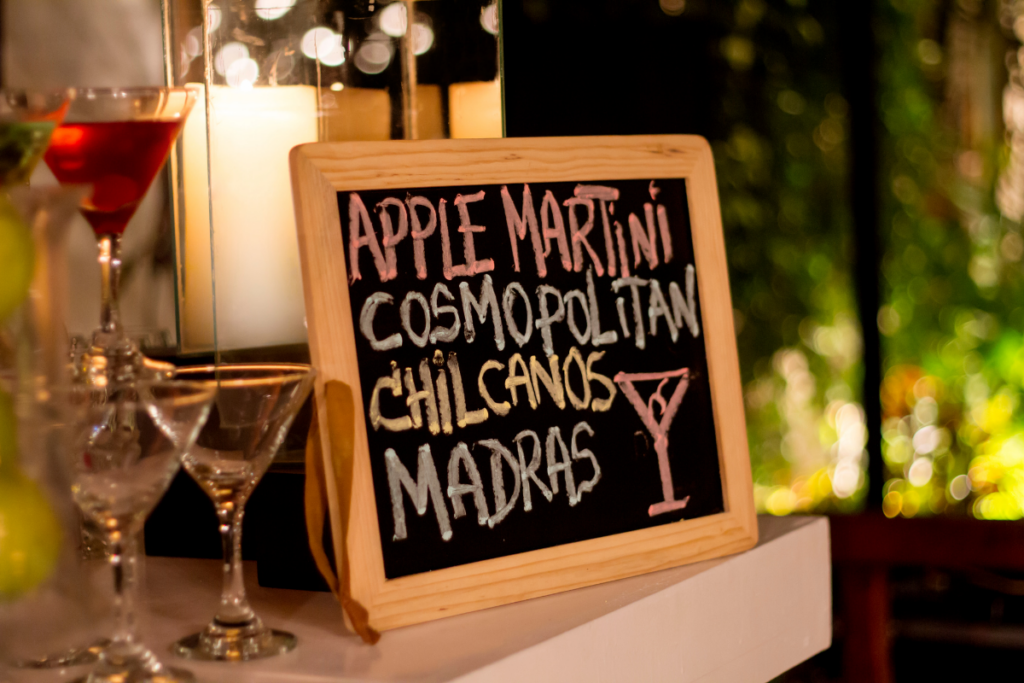
If guests are paying for the food, make sure you are still covering the drinks. A cocktail or mocktail on arrival is a lovely way to make guests feel welcomed.
✅ DO remember that you are still the hosts
Asking guests to contribute to their meal doesn’t mean stepping back entirely from your hosting duties. You want your guests to feel welcome, so if you aren’t covering food, make sure you have the drinks covered.
Small extra guest-focused touches can also give that taken-care-of feeling – think bathroom kits, homemade biscuits to take home, discount codes for Ubers, paper fans in hot weather or blankets for winter weddings. It signals to your guests that while the catering is being handled differently, you’re still thankful for their presence and want them to feel celebrated.
❌ DON’T expect gifts as well
If guests are contributing to the cost of their own meal, that’s the gift. It’s ok to have a box just for cards, but you should make it clear to guests that they aren’t expected to drop more cash into the card.
A simple, warm note on your invitation can set expectations clearly without making anyone feel awkward. Something like: “In lieu of traditional gifts or a wishing well, we kindly ask guests to contribute to their meal on the day.”
✅ DO give guests control over what they order (and what they spend)
Asking guests to pay for a set menu they have zero say in is a tough sell. Instead, give your guests some genuine choice over what they eat and, if possible, what they spend.
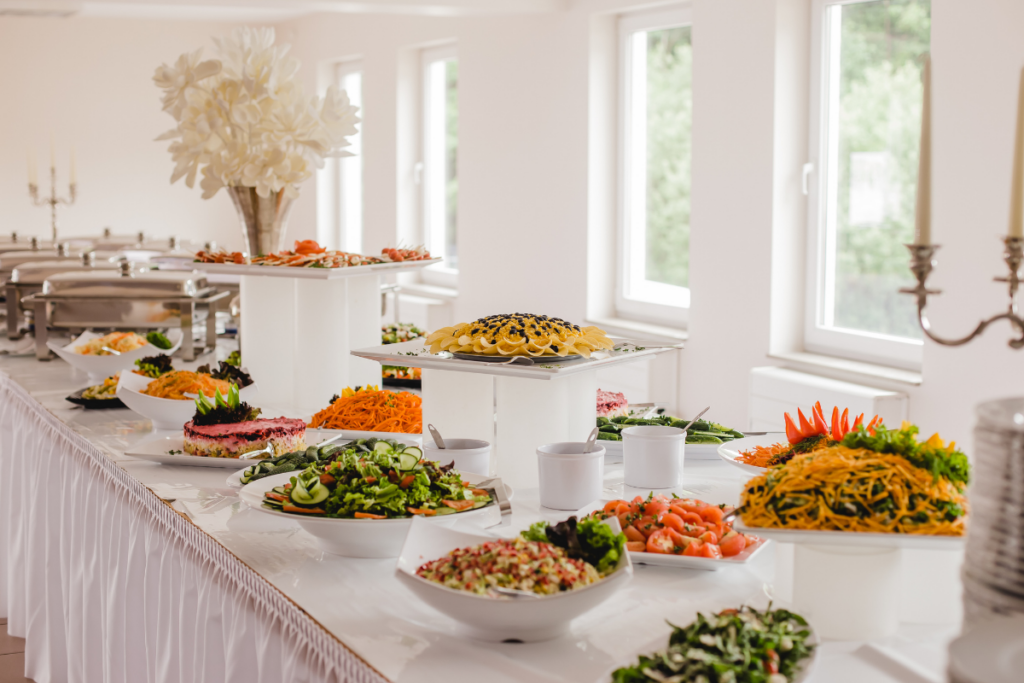
A restaurant or pub reception is ideal for this style of wedding since guests can order directly from a menu at a range of price points. Buffet-style also works well as an affordable option with lots of choice. If you’re working with a more traditional reception venue, ask if a small à la carte menu is possible. Guests could even pre-select their meal when they RSVP.
Consider the type of wedding reception you are having. A destination wedding is already costly for guests, but a reception at a local restaurant would give guests more control over what they'd like to eat and how much they'd like to spend.
❌ DON’T do this at a destination wedding
Your guests are already going above and beyond to celebrate with you if they’re travelling, booking accommodation and taking time off work. Adding the cost of their own meal on top of that is asking a LOT. Your guests’ generosity in simply being there deserves to be acknowledged.
✅ DO share the menu and expected costs in advance
Financial surprises are not the fun kind of surprises. Make sure guests know roughly what to expect before they arrive by including the menu with your invitation or sharing details on your wedding website.
If there isn’t a fixed cost, even knowing that meals range from $60 to $100 per person (for example) allows guests to plan ahead rather than be caught off guard.
Also, be clear about how payment will be handled. Will they need to pre-pay, or can they order and pay on the night? Make sure you include all the necessary details upfront.
❌ DON’T forget to brief your MC, wedding party and family
Someone will inevitably ask questions on the day, and the last thing you want is confused looks or mixed messages. Make sure your MC, wedding party and immediate family know how the catering will be working so they can point guests in the right direction.
✅ DO show grace towards guests who may find it a stretch
For a couple who both have full-time jobs, paying for their own meals might not feel like a significant expense, but for a family of five, that same cost can add up very quickly. Consider having a quiet conversation with family members or close friends you know might be on a tight budget, and offer to cover their meals without making a big deal of it.
A buffet-style reception is a great option for this style of wedding, as they are usually a more affordable option and offer a lot of choice
✅ And finally, DO still cover your wedding vendors’ meals
Unless you want your DJ or photographer popping out for a Maccas run in the middle of speeches, please make sure you factor the vendors’ dinners in your budget. In fact, a lot of wedding suppliers will have this as a requirement in their contract. Good news is that you can usually keep this cost low as they will only need one course. If you are at a dedicated wedding and events venue, ask about a vendor meals option at a reduced price.
It’s possible to have a guest-pays wedding reception done well
Weddings have changed a lot over the years, and the cost of hosting such a huge event has grown exponentially. Add to this the fact that in a lot of modern Australian weddings, it’s the couple (rather than their parents) footing most of the bill, it’s no wonder they are looking for ways to manage the most expensive item on the wedding budget.
While asking guests to pay for catering might raise a few eyebrows at first, if done with thoughtfulness, clarity and integrity, it can still lead to a wonderful and relaxed wedding for everyone involved.
Ultimately, the most important thing about your wedding is that you’re getting married, and that the people you love most are there to witness it. The ones who truly matter will be there for you, not the menu.
Pat Haynesa week ago
I LOVE The Celebrant Society! This is truly a Community of Celebrants. I've gained so much knowledge by being a member of this fabulous Flock of Flamingos. My first conference, in Sydney last year was mind-blowingly incredible. A two-day conference that included the best gathering of expert speakers in their field. It was informative, fun, and the BEST opportunity to meet with other celebrants and wedding industry legends! I've returned from the 2day TCS Melbourne conference and again, blown away with the Keynote speakers, the opportuntiy of learning and the company of like-minded people. Thank you to The Celebrant Society and incredible team of legends for not only putting this kick-arse conference together, but for the ongoing support from them and their legendary members who celebrate community over competition! xxx
Alison is THE go-to for all things Marriage Act and represents The Celebrant Society at the Attorney-General’s Department meetings in Canberra.
Widely respected as one of the best in the business, Alison is actively helping shape Australian celebrancy while supporting celebrants to navigate the legal landscape with clarity and confidence.
She also loves Buffy the Vampire Slayer, her cat Pancake, and helping two people stand up in front of their favourite humans and say, “this is my chosen person.”