How Can Venues Educate Couples Without Overwhelming Them?
You and your partner become the tour, and you imagine your celebration properly, your guests in the room, the first celebratory shouts. Then, you are bombarded with a lot of information: a pile of brochures, three different room options, three different package levels, 14 possible upgrades, and a surprising set of non-negotiable policies.
If a venue tour has ever made you feel the need to take a nap and create a comprehensive spreadsheet, you are not alone.
The good news is that superior venues know how to educate you without hitting you simultaneously. The even better news is that you can take the lead on the discussion and also ensure you have clarity without getting overwhelmed.
In this guide, you will find practical prompts to follow when making your inspections, as well as the ‘green flags’ that indicate that the venue team is concerned with providing practical advice and not information dumping.
Start with the “feel” (it saves you from asking 47 random questions)
Before you start asking about centrepieces or chair placements, you have to begin the conversation by asking one question:
“If we could sum up the vibe in three words, what would you say this space does best?”
You are not listening to a sales pitch. A good venue team would be able to explain the experience in a simple way, then make it fit into what you desire. Then share your version:
“We want the day to feel like: ____.”
Relaxed and social? Big party energy? Elegant and classic? Intimate and warm?
This is the simplest method of preventing the gathering of unnecessary information. When you are certain of a feeling, you will have filtered everything.
Ask questions that remove unknowns, not questions that create more options
Too many open loops lead to overwhelm. These questions close loops.
1) “What do couples usually forget to ask at this stage?”
This is a powerful question. It beckons the venue to train you out of experience.
Green flag: they will allow you 3-5 positive points (timing, wet weather, vendor bump-in, sound limits, accessibility, minimum spend).
2) “What decisions do we actually need to make now, and what can wait?”
The separation between early and late decisions will be made up for by a good venue.
Early decisions usually look like:
- date / season.
- guest count range.
- ceremony location preference.
- general service style (cocktail, banquet, shared dining).
Later decisions usually look like:
- exact menu selections.
- styling details.
- final run sheet.
- seating plan.
When they behave in such a manner that you are required to lock everything in the spot, then wait to be stressed in future.
3) “Can you walk us through how the day flows here?”
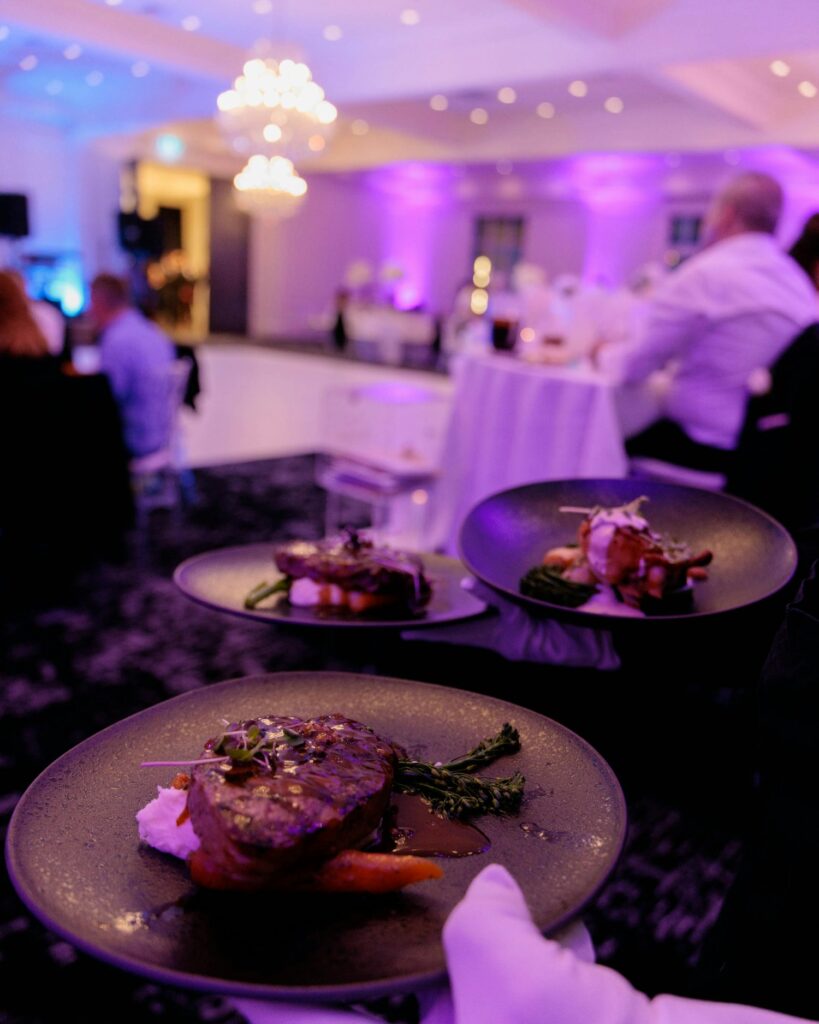
Rather than discussing inclusions under vacuum, you request an account:
- where guests arrive.
- where the ceremony happens (if on-site).
- where drinks and mingling happen.
- how the reception begins.
- where speeches and dancing fit.
- how the night ends.
This will make you envision the actual experience of your guests and not what the brochure will show.
Keep pricing simple with three questions
Money talk is very easy to lose track of when you experience the urge to perform mental calculations as in front of someone.
1) “What’s included in the base offering, in plain language?”
You desire a list of inclusions without fluff.
2) “What are the most common extras couples add, and what do they typically cost?”
It will prevent you from being caught upgrading later. It will also give you what is really optional.
3) “Can you give us one realistic example for our guest count?”
An example of a ballpark scenario that can generally be provided by a venue team is:
- guest count.
- day of the week.
- package level.
- typical add-ons.
At this point, clarity strikes a flawless quote.
Ask about constraints early (they can make or break your experience)
Bad constraints do not necessarily exist. The issue is hidden limitations.
Use direct questions:
- “What are the noise and music regulations, and at what time should the dance floor close?”
- “What are the latest we can bump in, and when do we all have to be out?”
- “Are there any dressing rules that we need to be aware of?” (flying, suspended installations, confetti, open flame)
- “What do you do when you get wet?” “Do you alter the atmosphere?”
- “What is accessibility in this case?” (free parking, ramps, toilets, the space between)
A venue that has answers to these with a lot of confidence is likely to have a smooth-running event.
The easiest way to avoid overwhelm: ask for two recommendations
When you are being presented with 10 options, you cannot know what counts. Bring it back to two. Try:
“Based on our guest count and the vibe we want, what are the two best ways to do this here?”
You are requesting the venue team to take the lead. That’s what you want.
They might give you:
- two room recommendations.
- two layout options.
- two ceremony locations.
- two package starting points.
You will go away with a clear head rather than a list of options.
Ask for a one-page recap
The next two or three visits to the same place make your brain start mixing up the venues. Ask:
“Could you email us a quick recap of what you’d recommend for us, plus next steps?”
A strong recap includes:
- the space(s) you viewed that fit best.
- The initial range of the package or the range of spend under discussion.
- what you need to decide next.
- availability notes and how long a date can be held.
This is a single move that reduces confusion significantly.
Why multi-space venues can make decisions easier, not harder
Several rooms might seem like an additional option, and it can be so when you are requested to assemble the entire day on your own.
In practice, a well-run multi-space venue that runs well may make the planning process simpler, as the venue team will be able to pair the appropriate room to the appropriate guest count and vibe and use the others to enhance the flow.
You can end up with:
- a room that is your size, so it feels like you are doing something.
- a clear transition from ceremony to drinks to reception.
- an indoor option that still feels premium if the weather changes.
- areas to cater to the various times of the day, without walking out of the premises.
This is particularly attractive when planning a higher alternative to the CBD establishments or wineries, and logistics are kept within check of your visitor.
A final word for couples: the best venue tours feel calm
A fantastic venue team can teach you steadily and not in haste. If you leave thinking:
- “We know what matters next”.
- “We understand the real flow of the day”.
- “Pricing is making it sound good enough to compare”.
- “We feel looked after”.
…that’s a positive indication that you have identified a venue that can help you navigate through planning without the anxiety. And in case you start to experience the pressure to plan at the very core of your being, this article will serve as a refreshing breath: How to mindfully reduce stress on your wedding day.
Photos and guest post compiled by Jose M Chavez